
Note from the director
DOI:
https://doi.org/10.17454/Keywords:
Fragility , Care, RepairtAbstract
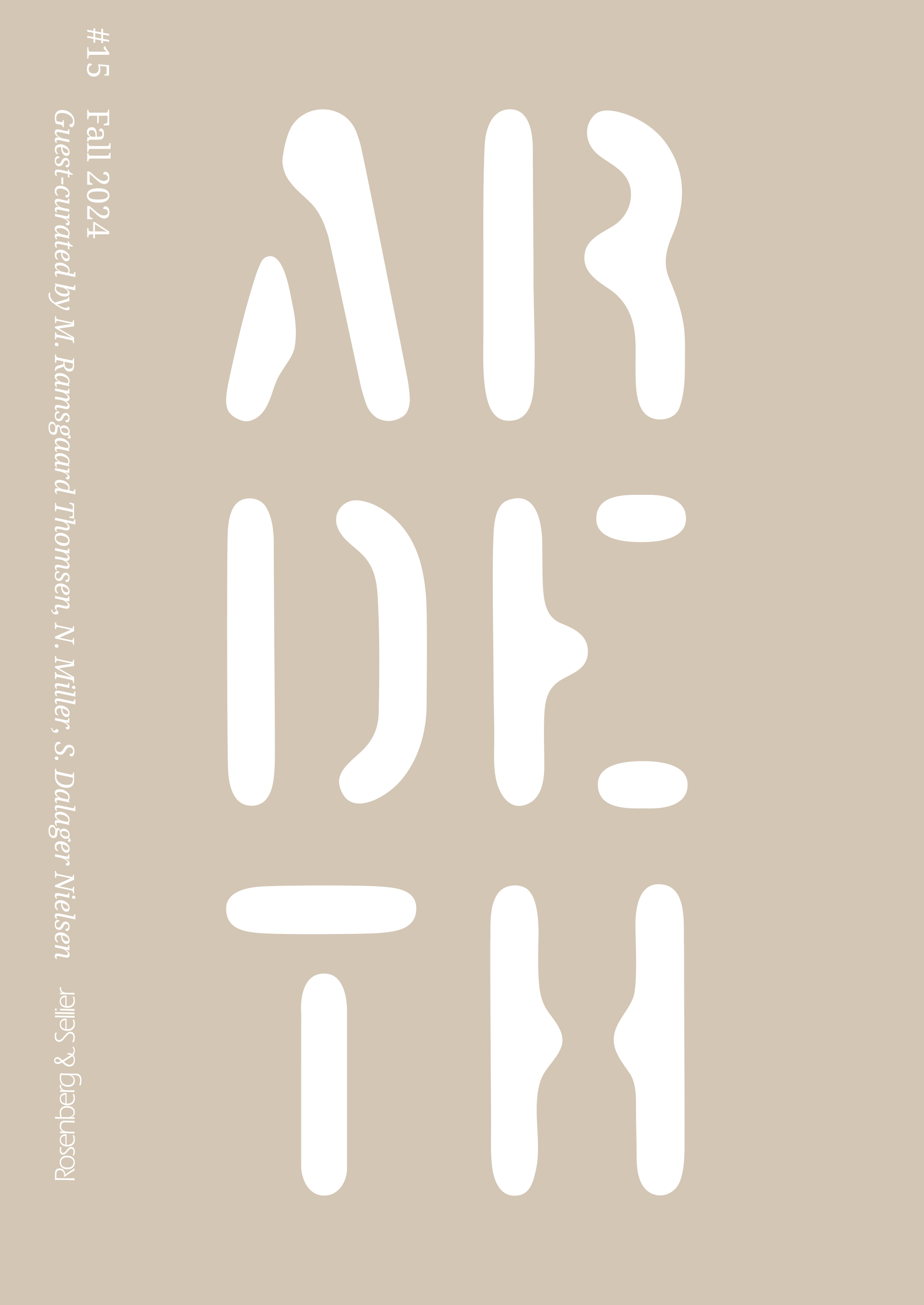
In this issue of “Ardeth,” the Editorial Board continues the commitment to exploring key concepts, a path first inaugurated with issue no. 12. “Fragility” has become an unavoidable term in the contemporary context, marked by increasingly frequent global crises. It represents a widespread and constitutive condition of existence that reveals the progressive dissolution of the foundations once considered stable in modernity, while simultaneously opening the possibility for a critical rethinking of the relationship between humans, environment, and matter. In the call for papers, the guest editors referred to Steven Jackson’s notion of the Broken World and to the need to transform vulnerability into an active principle of care, repair, and adaptation, fostering an ethical and operative engagement with what remains.
The development of the theme of Fragility stems from the proposal and commitment of the guest editors within the European Research Council (ERC) project Eco-Metabolistic Architecture, which investigates the potential of bio-based materials to establish new practices, technologies, and representations for an architecture of “limited duration.” The project was complemented by the international symposium Broken World Building, held in May 2024 and organized by Professor Mette Ramsgaard Thomsen and researcher Stine Dalager Nielsen at CITA (Centre for Information Technology and Architecture), Royal Danish Academy, Copenhagen.
This represents an unprecedented and highly valuable formula for “Ardeth”: starting from a European research framework to broaden the dialogue with a wider community of scholars working on similar grounds. The journal thus positions itself as a pivot for fostering the sharing and concretization of theoretical research in architecture, functioning as an intermediate tool for assessing its impact.
The ongoing debate on circularity, care, conservation, maintenance, reuse, and regeneration, within a broader “regenerative model of sustainability,” is interpreted by the editors through the lens of a possible ecology of building – a temporal and processual practice in which materials and resources undergo multiple life and use cycles.
The authors of the textual and visual contributions, in turn, expand the range of issues proposed by the editors, presenting case studies that together outline a choral and evolving body of research.
Downloads
Published
Issue
Section
License
Copyright (c) 2026 Ardeth

This work is licensed under a Creative Commons Attribution-NonCommercial-NoDerivatives 4.0 International License.
